
Healthcare Volunteering in Ao Nang, Thailand
From $3,395/2weeks - $10,595/12weeks
Contribute to holistic well-being and sustainable living in Ao Nang.
Immerse yourself in the beauty of Thailand’s Krabi Province while supporting holistic community health initiatives. Through locally-led workshops on nutrition, hygiene, and mindfulness, you’ll contribute to sustainable well-being practices that leave a lasting impact. Set against Southern Thailand’s stunning landscape, this program combines meaningful impact with opportunities for cultural immersion and connecting with nature.
- Durations: 2 - 12 weeks
- 35 hrs of fieldwork per week
- 1:6 participant to staff ratio
Grants available for up to $19,000! Get a Foundation Grant of up to 80% on community development programs. Everyone is invited to apply by 31 Jul.
Healthcare Volunteering in Ao Nang, Thailand
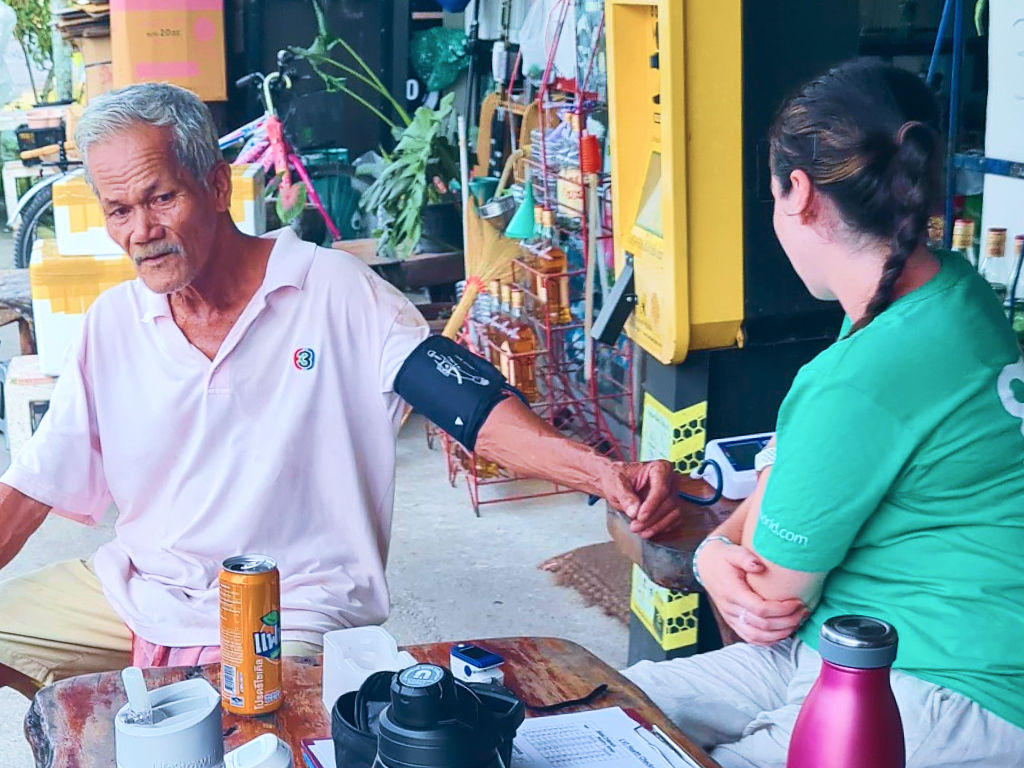
Learn about holistic practices in Ao Nang’s vibrant community and contribute to health initiatives rooted in sustainability and empowerment. As a volunteer, you’ll lead interactive workshops on nutrition, hygiene, mindfulness, and WASH (Water, Sanitation, and Hygiene), aligning with UN SDG #3, Good Health and Well-being, and UN SDG #4, Quality Education. These workshops aim to promote health while empowering communities to create lasting change.
You’ll work closely with local partners like NatureMind-Ed, a research-driven organisation focused on building resilient social-ecological systems. Together, you’ll support their mission to enhance public health and education while fostering environmental awareness and community capacity-building.
Your experience unfolds in Thailand’s picturesque Krabi Province, where lush mangroves, limestone cliffs, and turquoise waters create the perfect backdrop for meaningful work. You’ll stay in comfortable dorm-style accommodation at a community hub and immerse yourself in the rich traditions of Thai culture. From mindfulness workshops inspired by local practices to visiting colourful markets and serene Buddhist temples, every moment offers an opportunity for connection and growth.
Beyond your work, enjoy free time kayaking through mangroves, hiking to stunning viewpoints, or learning traditional Thai cooking. This program provides an enriching blend of ethical impact and personal development, equipping you with valuable skills in cross-cultural collaboration, public health facilitation, and sustainable development.
Highlights
- Make an impact through health education
Run interactive workshops on nutrition, hygiene, and mindfulness, fostering sustainable habits and improving community well-being.
- Experience Krabi’s natural beauty
Live and work in a region famed for its turquoise waters, serene beaches, and lush mangroves, while immersing yourself in Thailand’s rich culture.
- Get immersed in the community
Don’t just travel like a tourist. Become part of the local community and culture to experience a unique way of living – authentically.
- Contribute to enduring impact
Support and empower ongoing community development projects on the ground that are led by inspiring local NGOs.
- Join locally-led initiatives
Partner with social impact projects that are owned and led by local organisations who guide initiatives according to community priorities.
- Use your skills for good
Your unique expertise, skills and interests are matched to relevant community projects that address specific challenges.
- Make friends for life
Share meaningful experiences with like-minded, passionate changemakers from all over the globe.
- Enjoy a hassle-free, safe trip
With expert local staff, excellent reviews and 24/7 support at every step – you can relax and enjoy the experience stress-free.
Activities
Some of the example typical activities you could participate in on this program.
- Lead health and wellness workshops
Step into the heart of the community to deliver workshops on nutrition, hygiene, and well-being, promoting enhanced community health.
- Promote WASH practices
Help families adopt sustainable water and hygiene practices as you guide sessions on rainwater harvesting and WASH maintenance.
- Practice mindfulness and resilience
Join reflective yoga and meditation sessions under the shade of lush trees, fostering personal well-being and inner calm.
- Cultivate sustainable gardens
Get your hands dirty in community gardens, learning permaculture techniques that nourish both the land and its people.
- Host physical wellness activities
Lead community hikes, sports days, and retreats that blend health, movement, and mindful connections in stunning natural settings.
- Work in diverse teams
Collaborate with volunteers from across the world, exchanging ideas and learning leadership skills that drive sustainable change.
- Reflect on your journey
Take time to journal, share your experiences with mentors, or engage in discussions that spark personal growth and self-awareness.
- Pursue creative passions
Use your downtime to work on health initiatives, create social media campaigns, or deepen your understanding of community development.
Skills
- Community empowerment and well-being
- Cross-cultural communication
- Facilitation of workshops for children and adults
- Holistic approaches to health
- Organic farming and gardening
- Volunteering
- Cultural awareness
- Interpersonal skills
- Communication
- Teamwork
- Easily adaptable
The following itinerary is an example of the activities and project work that participants might get involved in on this program. More specific details of the program are finalised several months before each start date.
08:00
Enjoy a delicious breakfast together to start the day. Breakfast is usually a combination of eggs, toast, fruits and coffee/tea.
09:00
Depending on the needs of the community and the program you have joined, this might include workshop preparation or lesson planning, health education activities, teaching or other community initiatives.
12:00
Take a break for lunch. Lunch usually includes Thai dishes ranging from pad thai, curries and fried rice to diverse veggie dishes and locally made snacks.
13:00
Depending on your chosen program, you may be involved in leadership training or take on additional responsibilities like conducting a community needs analysis, data collection and research, working on a fundraiser or developing new project materials.
Read more
17:00
On some days, you'll participate in further project work, focus on your personal project (internship, fellowship and apprenticeship participants), or work on personal development activities like journaling. Or enjoy some free time before dinner.
19:00
After a rewarding day of project work, make your way back to your accommodation for the night.
19:30
Prepare and eat dinner. Take the opportunity to reflect and connect with other participants.
20:30
The rest of the evening is free to relax or get involved in social activities.
General
- Food
- Safe and basic accommodation (usually shared)
- Airport pick up (unless stated)
- Project equipment
- 24-hour in-country support from local staff
- 24-hour emergency desk
- GVI Experiences
Activities
- Sustainable project work
- Data collection and research
Pre-program training
- Pre-departure webinar
- Pre-departure training (online)
- University of Richmond endorsed specialisation course
Welcome training
- GVI welcome presentation
- Health & safety
- Local culture & environment
- UN SDGs
- Impact & ethics
- Child protection
Certificates
- Program certificate
- University certificate – specialisation (University of Richmond)
- Flights
- International and domestic airport taxes
- Medical and travel insurance
- Visa costs
- Police or background check
- Personal items and toiletries
- Additional drinks and gratuities
Our community hub, located in Krabi Province, offers easy access to Thailand’s most popular locations, including Ao Nang town.
Krabi is famed for its natural beauty with stunning beaches, limestone cliffs and lush forests. You can enjoy activities like rock climbing and kayaking, or go for a hike in nearby national parks such as Khao Phanom Bencha and Than Bok Khorani to spot wildlife and take in the scenery. Immerse yourself in the local culture with visits to temples, shopping and nightlife.
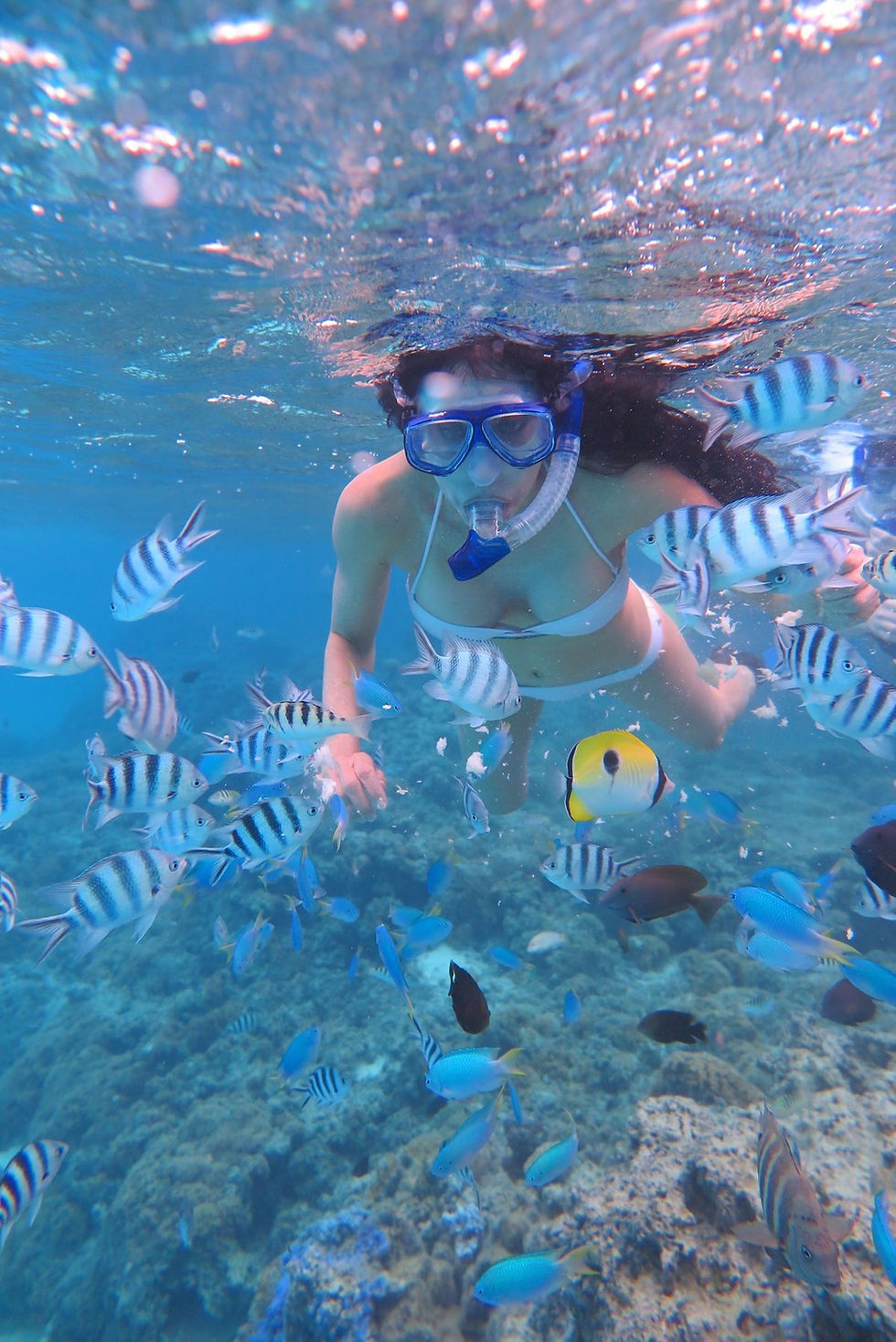
As a volunteer in Thailand, you’ll have the chance to see incredible species like whale sharks, gibbons, woodpeckers and hornbills. And if you’re really lucky, you may even spot highly elusive dugongs and sea turtles.
For those with an adventurous spirit, don’t miss out on Krabi’s attractions, including the Emerald Pond and Tiger Temple Cave. And make sure to explore the Andaman Islands for their epic marine life.
Accommodation
You’ll stay in comfortable, dorm-style accommodation with shared bathroom facilities.
Transportation
When you arrive at Krabi International Airport (KBV), we’ll pick you up and take you to your accommodation. Throughout your stay, we’ll provide transportation to and from our scheduled project activities. Ao Nang, with its vibrant nightlife and dining options, is just a 15-minute drive away, while Krabi Town is about 30 minutes. For further exploration, you can use a bicycle or book a taxi. Since Thailand is less walkable with places spread out, our field staff can share contact details for trusted taxi drivers to help you arrange transport. If you prefer, bicycles are available at no extra charge. For your safety, we recommend avoiding motorcycles or scooters on Thailand’s busy roads.
Communication
Stay connected during your stay with Wi-Fi available at your accommodation. Need mobile data on the go? Bring along a network-unlocked phone and, upon arrival at the airport or in various city stores, you can purchase a local SIM card. We suggest opting for a TRUE or AIS network SIM card for seamless connectivity. Note: if your phone requires an eSIM, you will be responsible for obtaining one.
Meals
Breakfast and lunch are provided at the accommodation from Monday to Friday and most meals are served buffet-style. Breakfast is usually a combination of eggs, toast, fruits and coffee/tea. Lunches are Thai dishes ranging from pad thai, curries and fried rice to diverse veggie dishes and locally made snacks. Vegetarian, vegan and gluten-free options are available upon request if you notify your Support Coordinator of your dietary requirements in advance. You will need to cover the cost of most of your evening meals, but we do have dinner together every once in a while. Participants also have access to a fully equipped kitchen, complete with basic cooking ingredients, allowing you to whip up your favourite dishes for dinner in the evenings.
Climate
Thailand has a tropical climate, perfect for enjoying its stunning beaches. There are two distinct seasons: dry and wet. Dry season (Nov-Apr): Lower humidity and minimal rain, with temperatures between 24°C to 32°C (75°F to 90°F). It’s prime time for hitting the beach and exploring outdoors. Wet season (May-Oct): Higher humidity and lots of rain. Short, heavy showers and thunderstorms are common, with temperatures still warm at 24°C to 32°C (75°F to 90°F).
Culturally appropriate dress and behaviour
When on project and in the local town participants will be expected to wear modest clothing and behave in ways in keeping with Thai customs. When visiting temples or religious sites, it’s important to dress conservatively, covering shoulders and knees. Removing shoes before entering sacred spaces is customary. It’s important to be mindful of the deep respect Thai people have for the royal family. Avoid expressing any negativity towards them, as it could cause upset or offence.
GVI experiences included in your program, at no extra cost.
Offered once a month, expand your adventure with GVI Experiences. These are just some of the activities offered on your program!
We want you to make the most of the chance to live in – and contribute towards – the most diverse and unique wildernesses and communities on earth. Introducing GVI Experiences – immersive adventure, cultural and wellness activities exclusive to GVI that have been specially designed in collaboration with our local partners to support and stimulate sustainable economic development.
Enhance your impact. Expand your adventure. Explore your world.
- Learn to make traditional Thai food
- Visit a Buddhist temple
- Hike to Dragon’s Crest
- Master Muay Thai self-defence techniques
- Kayak through mangroves
- Hike to Huay Toh waterfall
- Swim in a clear freshwater lake
- Take part in a meditation and hatha/yin yoga class
By joining a GVI program, you not only have the opportunity to work in collaboration with local communities, you also get the chance to explore the surrounding area or venture further to see what else the region has to offer on weekends.
Our field staff are a great source of advice on local travel options. Many participants choose to travel before or after their experience, solidifying friendships made on the program.
Engaging with a new context teaches global awareness, adaptability and critical thinking – skills highly valued in today’s world. Cultural immersion is encouraged, and there are many activities to enjoy during your free time or before and after your program. Please note, these suggestions aren’t included in the program fee and are at your own expense.
- Ao Nang
Known for its amazing limestone rock formations, pristine beaches and rich culture, Ao Nang is a pocket of paradise in Southern Thailand. Its beaches and islands offer many opportunities for spotting unique marine and terrestrial species. The community here is very traditional – making it possible to fully immerse yourself in the incredible Thai culture.
- Festivals
February: Magha Puja is an important Buddhist holiday, celebrated on the new moon of the third lunar month, during which people make offerings at temples around the country.
April and May: Thailand’s New Year, also known as Songkran, is celebrated during April every year. It is a family-centred holiday, and many travel to their homes where they honour the older members of their extended families. They wash statues of Buddha, which represents good fortune and cleansing of the past before stepping into the new year. In May, Thai people celebrate Buddha’s birthday (also known as Visakha Puja). Community members gather at temples to give donations, listen to sermons, and chant prayers.
July to October: In July, many Buddhists celebrate Asalha Puja, which commemorates Buddha’s first sermon to his disciples. This starts the annual three-month retreat of the monks, known as Vassa. The retreat ends with a celebration called Wan Ok Phansa. This is marked in Northeast Thailand with illuminated boat processions filled with offerings and beautifully decorated with flowers, candles, and lamps.
September/October: Also known as the Nine Emperor Gods Festival, the Thai Vegetarian Festival takes place in the 9th lunar month of the Chinese calendar, usually in September or October, and lasts for nine days. During this time, members of the community abstain from eating meat, drinking alcohol and telling lies, in order to purify the body and mind. In the days leading up to the festival, the island is decorated with yellow Chinese flags. Phuket prepares for the festival by deep cleaning their shrines, setting up stages, hanging elaborate Chinese-inspired decorations and parade accessories. Dozens of vegetarian food stalls are set up and line the streets of Phuket Town. The festival is popular in towns and districts across Thailand, including Takuapa, where we celebrate.
November: Loi Krathong, the festival of a thousand lights, is celebrated in November. People set thousands of lanterns out on rivers and lakes around the country to pay their respects to the goddess of water, Ganga. It is a spectacular site that draws many international visitors each year.
- Spirituality and religion
Most Thai people subscribe to Theravada Buddhism. There are many local Buddhist sites in the region of Phang Nga that you can visit to learn more about Buddhist customs. Travel to Wat Suwan Khuha to see the reclining Buddha or Wat Rat Uppatham to see a massive painted statue of Kuan Yin and Buddha rising out of the lush green countryside. In our local area, you’ll find a mix of Thai, Chinese and Burmese Buddhism, which have their own temples and traditions. We are ideally located to experience all three.
- Dancing
The fluid movements and opulent gilded costumes of Thai traditional dancing are recognisable worldwide. Learn about the six types of Thai classical dance, watch a performance, or maybe even attend a class where you can learn some traditional movements.
- Cooking
Thai food is famous the world over and is known for its fragrant, spicy flavours. Participants may be lucky enough to participate in cooking lessons, so during your stay in Ao Nang you might have the opportunity to learn how to cook some authentic Southern Thai or Burmese dishes. There will also be many opportunities to try different types of authentic Thai cuisine while out and about in your free time.
- Languages
There are about 71 languages in Thailand with five main families: Austronesian, Hmong-Mien, Thai, Mon-Khmer and Sino-Tibetan. Thai is the national language of Thailand which is spoken by approximately 80% of its population. The Thai language is incredibly complex. It is tonal and altogether there are five tones: mid, low, high, rising and falling. This means you can say the same word five different ways, and it will mean five different things! All participants receive Thai lessons, and you can learn more about the language by mastering some basic conversational phrases with the local community members. Viewed as a gesture of respect, members of the community love it when visitors make the effort to speak Thai. The members of our community also speak Burmese.
Weekend trips
- Island hopping
The Similan and Surin Islands are both protected Marine National Parks. They are home to several world-renowned diving and snorkelling spots, but can only be visited between October and May, the Thai dry season. While you’re there, you might be lucky enough to spot manta rays, whale sharks, nurse sharks and blacktip reef sharks. Camp on Surin island to experience life within the nomadic Moken community, also known as Sea Gypsies. One of the few remaining hunter-gatherer populations in Southeast Asia, they live lightly, making minimal impact on the natural environment. If you are looking for an island that can be visited all year round, why not explore the Phi Phi islands? Located further afield, they’re famous for the Viking Cave, a dramatic limestone cliff formation featuring a rock painting of boats.
- Khao Lak
This is a very popular tourist spot. It’s filled with seemingly endless beaches, so many dining options you will be spoilt for choice, and hundreds of spas offering massages and treatments at reasonable rates. With a wide range of accommodation options, from luxury resorts to hostels, Khao Lak offers you the chance to spoil yourself for a few days – whether you are on a budget or looking to splurge a little.
- Khao Sok National Park
Said to be more diverse than the Amazon, this 740 square metre rainforest reserve is home to elephants, deer, monkeys, lizards, birds, and the Rafflesia, a giant flowering plant with the largest flowers in the world. In the middle of the oldest evergreen rainforest in the world (at least 160 million years old) lies Cheow Larn Lake. Here you can trek through the jungle, kayak through estuaries, mangroves and tidal lagoons, swim in waterfalls, and explore spectacular limestone caves. Plan a day trip or book an overnight stay in one of the jungle tree houses or floating bungalows.
This volunteer tour's operator meet you at the airport.
When it comes to support, we ensure that each participant is provided with unparalleled, 360 degree support, from your initial contact with the GVI Family, all the way through your program, and even after, as you become part of the GVI Alumni Team.
As part of this promise, we will ensure, whenever possible, that one of our dedicated staff will be available to meet you at the airport. In most locations, we also set up a Whatsapp group to help with managing airport arrivals.
We will arrange with you prior to your departure that, should you arrive in the agreed upon pick up window, a member of our team or representative will be there to welcome you, easily identifiable in a GVI t-shirt or holding a GVI sign and wearing a friendly smile.
This means there will be someone there to greet you as you land, and from there you will be transported to your GVI base to start your adventure and meet the rest of your team.
Flights
Find your flights with TWAC! We can quote the best flight options that fit your needs.
All of our programs have short-, mid- and long-term objectives that align with the United Nations Sustainable Development Goals (UN SDGs). This enables us to report on our collaborative impact across the world in a streamlined manner, measuring which UN SDGs we are making a substantial contribution to. Furthermore, this will help our local partners and communities measure and visualise their contribution to the UN SDGs.
Prior to your arrival on base, you will be educated about the UN SDGs. Then once you arrive on base, you’ll learn about the specific goals we have in this particular location, our various objectives, and also clarification of how your personal, shorter-term involvement contributes to these.
Our aim is to educate you on local and global issues, so that you continue to be an active global citizen after your program, helping to fulfil our mission of building a global network of people united by their passion to make a difference.
Project objectives
GVI Ao Nang long-term objectives:
- To provide equal, quality education to people of all backgrounds.
- To promote good health and well-being through workshops and improve the overall health of the community
- To increase skills for local people to gain access to equal employment opportunities in our communities within Takuapa and Ban Nam Khem.
- To increase public awareness of environmental issues and the importance of environmental protection.
- To ensure continuous knowledge exchange with the local community and community capacity building.
No entertainment-based activities
We don’t support the use of wild animals for entertainment purposes. This includes riding animals, having them perform tricks, feeding or bathing them or getting close to them to take photos
No orphaned animal sanctuaries
We don’t encourage, support or allow the rearing of “orphaned” wild baby animals kept at a “sanctuary”. The conservation value of these types of programs is negligent and would only ethically be used in extremely rare cases
Guidelines for touching or movement restriction
When wild animals are restricted for conservation purposes we follow the guidelines of Fair Trade in Tourism South Africa (FTTSA), approved by the Global Sustainable Tourism Council.
Animal welfare guidelines
We ensure that the Five Freedoms of Animal Welfare are followed. These include the freedom to express normal behaviour and freedom from distress, discomfort, hunger, thirst, fear, pain, injury or disease.
Local community empowerment
We ensure that conservation efforts are also always locally led, that community needs are front-and centre of any conservation effort and that our participants, projects and partners work to increase local community engagement in local conservation efforts.
No veterinary programs
We don’t offer any veterinary programs or animal rescue and rehabilitation programs. We don’t allow participants to do any work they would not be able to do in their home country.
No medical volunteering
We don’t offer any programs where our participants engage in medical treatment. This is because our participants aren’t typically qualified to do this work and would therefore not be able to do this work in their home country. Our participants only assist with public health programs.
Planning your next adventure is thrilling! While we hope for smooth travels, preparing for the unexpected is always smart. We highly recommend getting travel insurance when you book. Whether it's a medical emergency, a flight cancellation, a delayed suitcase, or an unforeseen event, ensure you're covered. For more info and advice, please visit: www.twac.com.au/travel-insurance or talk to your TWAC travel consultant.
Voluntary Changes
Includes booking changes requested by you, including but not limited to those changes requiring an airline ticket or a Purchase Confirmation reissue.
• Changes - $100.00 per booking + additional charges from the airline/cruise company/accommodation/other travel providers.
Name Changes Due To Passenger Error
• If the incorrect name has been advised to TWAC, charges of $100.00 per booking + any additional charges applied by the airline/cruise company/accommodation/other travel providers.
Supplier Fees
In the event the Travel Offer you have purchased is unable to proceed, and/or a travel Supplier is unable to fulfil the Travel Offer due to external circumstances (Limitation of Liability e.g. a Force Majeure event), there may be a fee or amount of money that is withheld by our Suppliers and is unrecoverable. This may be due to non-refundable airline tickets, cancellation penalties with cruise cabins or unrecoverable payments with our land/accommodation partners. TWAC has committed to these costs as your Agent and will endeavour to recover all funds committed and/or paid for your Travel Offer, but this may not be possible in all circumstances. If refunds are unavailable from Suppliers, we will endeavour to obtain a travel credit on the best terms available and communicate these outcomes to you. If TWAC cannot obtain a refund or travel service credit, or part thereof, this cost is passed on to the customer as a Supplier Fee. This fee is not revenue-raising and is paid to or withheld by our suppliers when recovering payments.
Although you should read all of the terms and conditions, the following is a summary of the most important:
- Our travel package is non-refundable, however you will receive a travel credit to be applied to our travel services.
- You, as our client, agree to check all documentation immediately for errors. Travel With A Cause (TWAC) does not take responsibility for incorrect dates or names supplied.
- Prices, including, in some cases, of confirmed bookings, may be subject to change.
- Some confirmed bookings are non-refundable if cancelled by you and it is your responsibility to check if this applies.
- We will be entitled to retain our service fees even if a booking is cancelled or does not proceed for any reason which is not our fault.
- It is your responsibility to make yourself aware of all information relevant to your travel plans, including but not limited to visa requirements and health precautions.
- There may be some additional fees or other incentives from Suppliers.
- We are not liable for the recent updates of any published Supplier content including websites and brochures
CANCELLATION POLICY
Tour packages are non-refundable. If your tour package is affected by Covid-19 related travel restrictions and you are unable to travel, you will receive either a free date change (credit that is specific to your original package and purchase value) or an open credit less any non-recoverable supplier fees to the value of your original purchase for use on any other tour or package available via the TWAC website.
Please note: Date change credits are subject to availability and not guaranteed until confirmed by TWAC, not the tour operator you are due to stay with.
We recommend you consider purchasing travel insurance with Covid-19 protection. The standard cancellation policy will apply if you cannot travel because you have tested positive for Covid-19.
Please note: All additional charges are payable in AUD (unless otherwise stated).